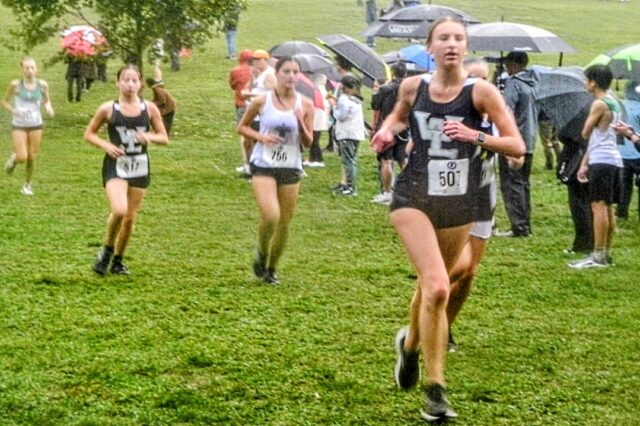
Ever-changing autumn weather conditions make each college and high-school cross-country season unique.
Foul weather can often cause postponements of other outdoor fall high-school sports, but cross-country are expected to proceed. That’s the nature of the sport.
With the exception of thunderstorms, heat warnings or deep snow, no matter the conditions — warm, cold, rain, snow, ice, wind, wet or extremely dry — races usually go on.
Runners understand and are expected to be prepared to run in whatever conditions are presented, which sometimes can significantly change the conditions of a course.
“We try to prepare runners for bad-weather races the best we can, and they tend to like the challenge,” said John Bacon, the head coach of the Washington-Liberty High School cross country team in Arlington.
Other coaches have similar responses, explaining that some runners embrace foul conditions, making them more determined.
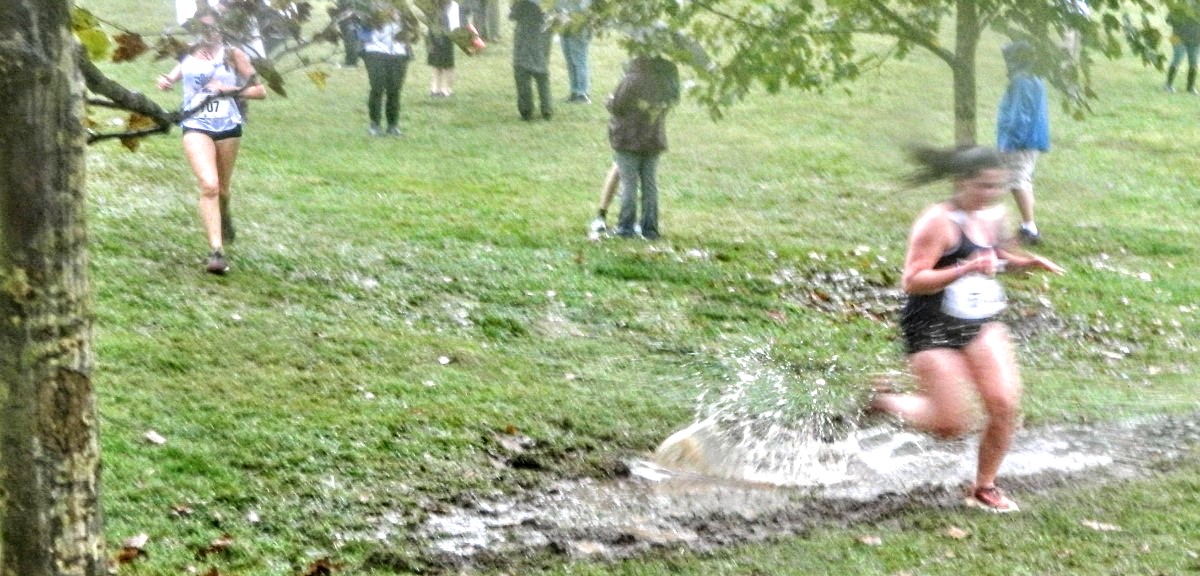
Former Washington-Liberty runner Emmett Englehart did so in winning the 2024 Arlington County boys varsity meet, held in heavy rain and slippery conditions. His post-race comments included making the best of the situation and not giving in to the muck.
The rain became so heavy during that late-September meet that the course had to be altered in impromptu fashion for the girls race, which was the second of the afternoon. Part of the course had become flooded by the time that race was started.
Runners splashed through numerous mud puddles on the course in both races and faced slick uphill and downhill footing.
Weather conditions became so extreme a few years ago during a high school conference-championship meet at Lake Fairfax Park that a number of high-school football games were postponed later that day.
During the cross-country races that day, it rained, snowed and sleeted. Also, a usually narrow and shallow creek in the course, which normally flows at a trickle pace, became feet wide and inches deep, became moving swiftly and the water level rose significantly to shin and knee deep height as the runners tried to cross.
A few lost their balance in the creek and struggled to regain footing.
Also, there was a lengthy and steep downhill stretch near the finish where one runner fell and slid a number of yards, regained footing, only to fall and slide again.
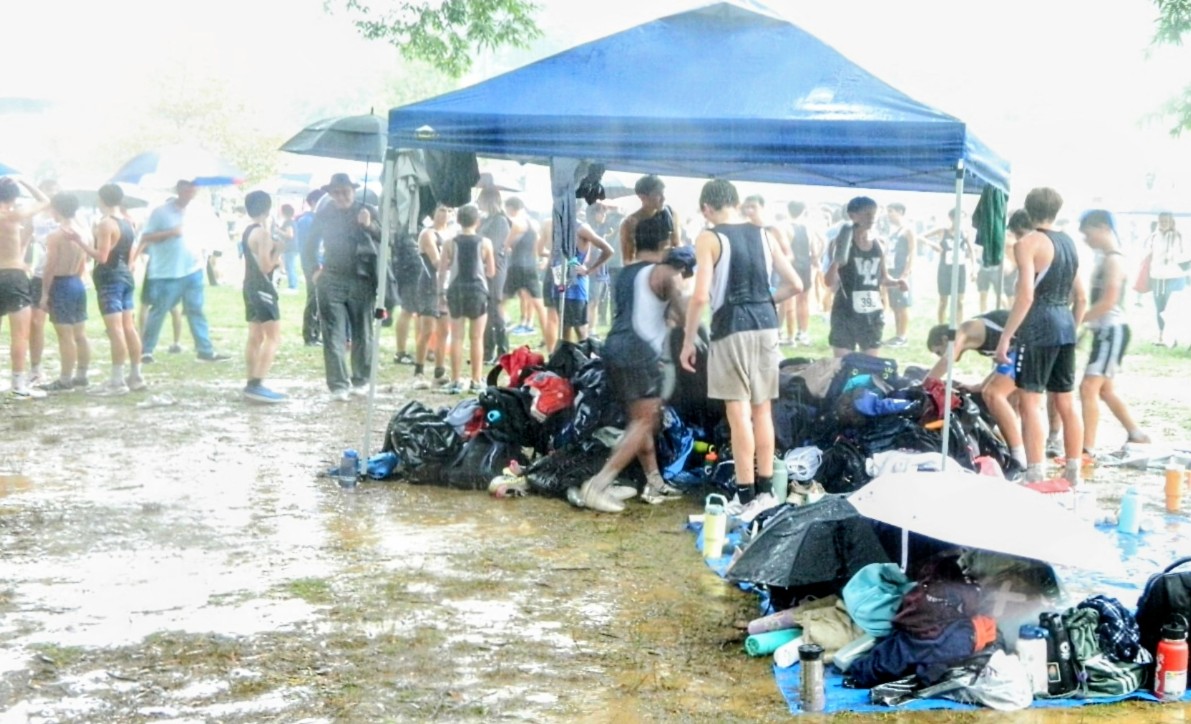
During another early fall race on the Burke Lake Park course, another normally small stream that sometimes contains no water at all swelled significantly near the finish. A runner fell crossing that stream and actually disappeared for a half second before struggling to get back to her feet.
More than any other weather conditions, cross-country runners struggle most with drastic and sudden temperature changes in either direction.
At the state high-school meet on the Great Meadow course in The Plains one year, the fall weather leading up to the races had been seasonably warm. However, temperatures fell significantly by race day to near freezing.
Many runners struggled with the thermometer change. The finish-line area resembled a busy triage because multiple runners had fallen to the cold ground as they were helped by the meet’s overwhelmed athletic trainers.
Despite those examples of foul conditions that can cause runners to fall, slip and struggle to maintain balance, the one thing in common with all of those meets is they found a way to finish their races.
Another weather-related late fall cross-country issue is fallen leaves. They can be slipped on in dry or wet conditions and sometimes cover tree roots along a course.
In that case it’s important that runners are familiar with the course and where the roots are located.
That’s all part of being prepared for everything in high school and college cross-country.