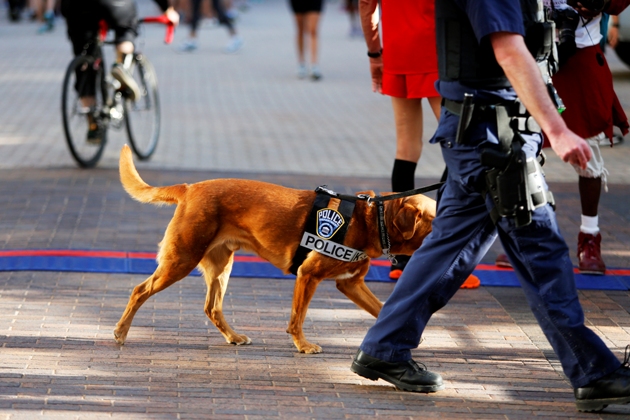
The usual plan for the George Washington Parkway Classic calls for securing a 10-mile, point-to-point course that starts at Mount Vernon, proceeds along George Washington Memorial Parkway, and finishes in Alexandria – a short walk away from Oronoco Bay Park. This means, on one hand, that some sort of barrier must stand between every driver and every possible opportunity to unknowingly or knowingly enter the race course. On the other, it means that course marshals and police officers must be ready to stand by and enforce these barriers; and, should the unthinkable happen – a vehicle on the course – the plan includes being ready for that, too.
There is the job of safely transporting 6,000-or-so runners from an area near the finish – where many park – to the start. There is the readiness for any on-course injuries. There are risk management strategies. And yes, there is water, and sports drinks, and gel packs, and clocks at mile markers.