The call went out on a Saturday — “does anyone have an Army Ten-Miler bib?” The race was the next day.


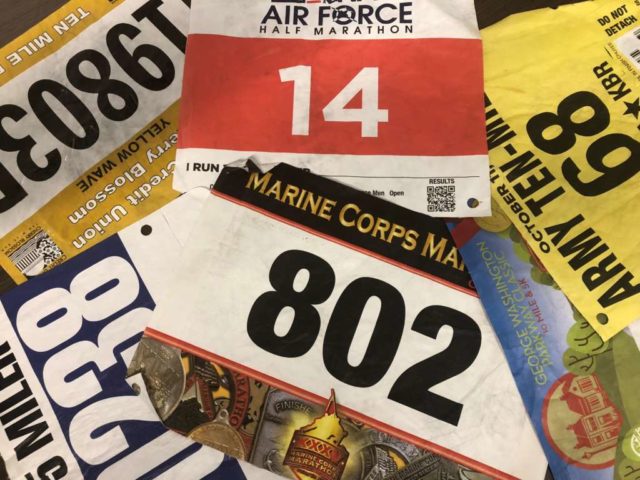
The call went out on a Saturday — “does anyone have an Army Ten-Miler bib?” The race was the next day.
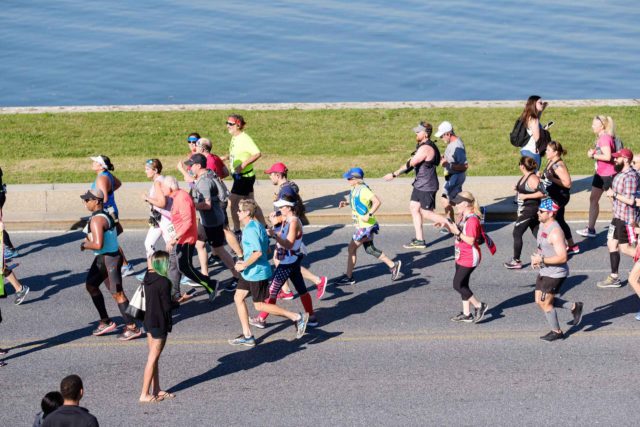
As I write this, Marine Corps Marathon training is reaching its zenith. The calendar holds just a few more weeks for hard training.
And by the time you read this, you’ll be tapering. It could even be race week, your thoughts shifting to smaller details.
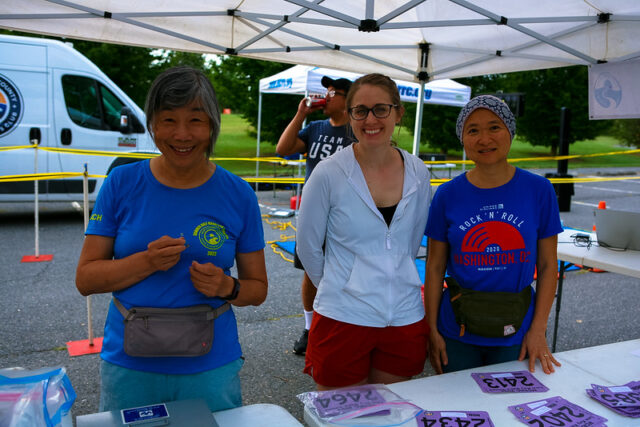
What makes one event stand out over another? Have you been to a race and left with a memorable moment? The magic comes from the first person you encounter, the volunteer.
The volunteer sets the stage for you and how you will evaluate the experience. The volunteer will help you navigate a large packet pick-up area. How many times have asked, “Where do I get my number? The volunteer comes to the rescue. Can you imagine on a sweltering day, and you come up to a water table and no one is there. How many times have you come up and there are more hands holding cups and you can not make your mind up from whom take the cup? The volunteer makes your life seamless and all you must do is run.
Fairfax County Detectives have arrested and charged a 42-year-old Herndon man with crimes related to indecent exposures near the Washington and Old Dominion Trail in August, the department reported.
The county’s Fugitive Track and Apprehension Unit arrested Juan Alfaro Rodriguez, of Herndon, Sept. 8 for warrants from another state. Through an investigation by our Major Crimes, Cyber and Forensics Bureau and the Herndon Police Department, Alfaro Rodriguez was charged with three counts of indecent exposure. Rodriguez was taken to the Adult Detention Center and remains held without bond.

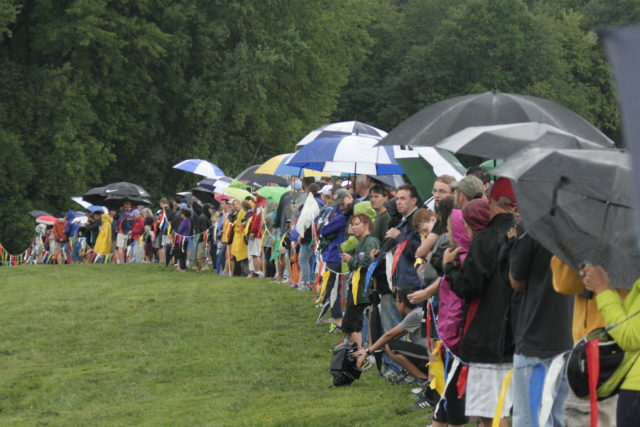
As a new high school cross country season begins, there are things parents of aspiring runners need to know to best support their child’s budding interest in this glorious sport. Cross country is its own unique (and painful) animal. And high school cross country, with its range of talent, experience, and intensity among athletes, parents, and coaches, requires some advance preparation and understanding before diving in.
First, the setting matters. Races can range from tri or quad meets with just a few teams lining up in a parking lot, to a massive invitational with colorful tents, banners flying and packs of kids running around in every possible shade of bright matching singlets. It can feel more like a medieval fair than a modern day sporting event.
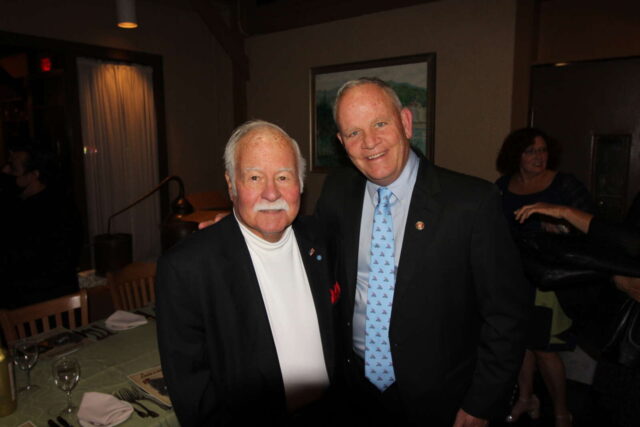
Rick Nealis made some choices on the fly while running the Marine Corps Marathon in 2020.
Since the COVID-19 pandemic forced the race he has directed since 1993 to go virtual, he crafted his own course, though without his usual authority to close down roads he was accustomed to. He meandered the W&OD and Mount Vernon trails in Northern Virginia to get his 26.2 miles. With a course change after a mental remapping, a detour into Alexandria and a stop for refreshments in Old Town, he took what the day threw at him. It fit the perspective that has helped make his race a pillar of the American running community.
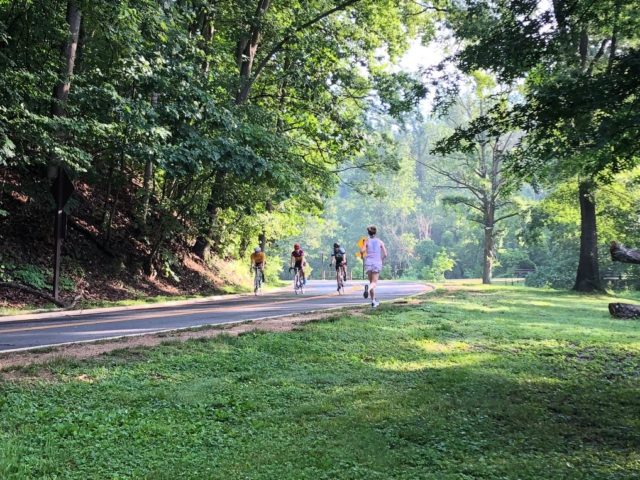
Beach Drive would reopen to through traffic after Labor Day under a proposed plan by the National Park Service, which has mostly closed the road since April 2020 to allow for more room for physical distancing during the COVID-19 pandemic.
NPS is accepting comments until 11:59 p.m. Thursday Aug. 11 on its plan, which would formalize weekday closures between Memorial Day and Labor Day. That would increase the existing policy to close the 4.2-mile stretch on weekends and holidays, but rolls back what had been a nearly-2.5-year closure to allow for more physical distancing during the pandemic. That closure has allowed for a dramatic increase in daily use by runners, cyclists, walkers and more.
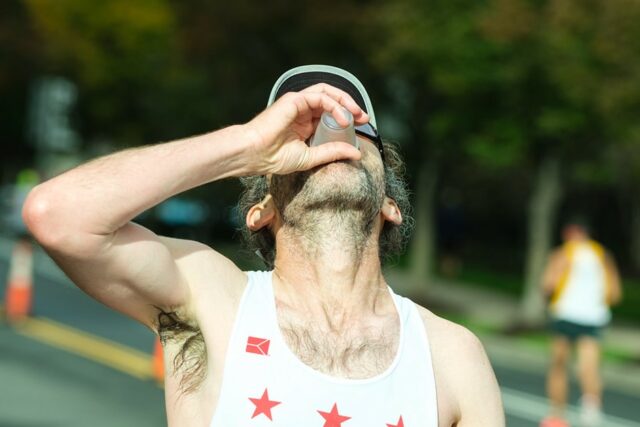
The days are getting longer and the weather is getting warmer — which can mean one big thing for the running community: more runners are taking to the region’s sidewalks, paths and trails.
As more runners ditch the treadmill in favor of running outside, there are health and safety reminders to consider. Chief among them is knowing the correlation between warmer temperatures and running risk, said Dr. Wiemi Douoguih, the medical director of MedStar Sports Medicine for the Washington region. Spring can yield some warm-but-not-too-warm running conditions, but “just because the air feels [cooler], you have to be careful,” he said.
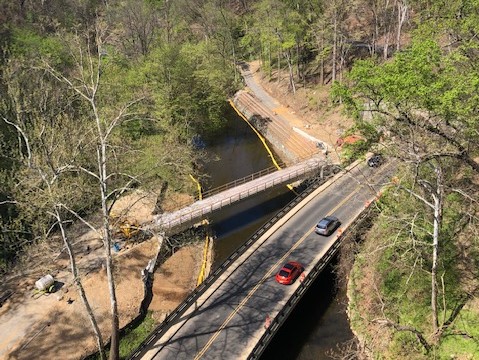
D’Amato makes world marathon team, hopes arise for July completion of zoo loop, one pedestrian offramp for the American Legion Bridge in Maryland.