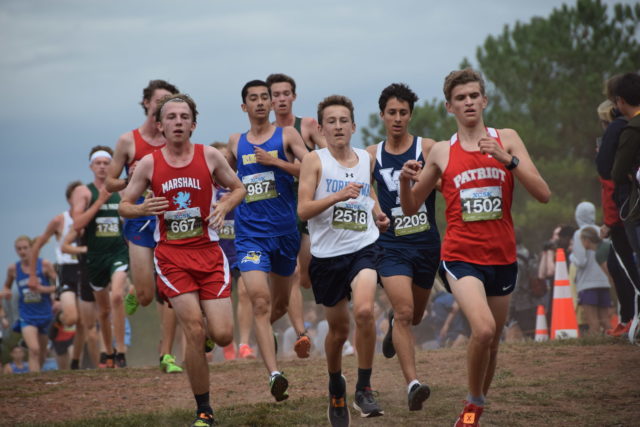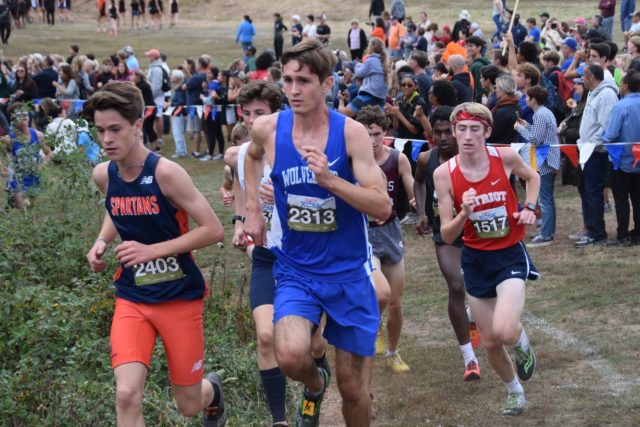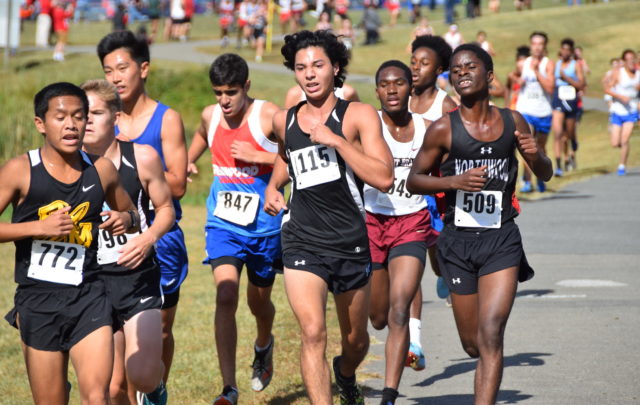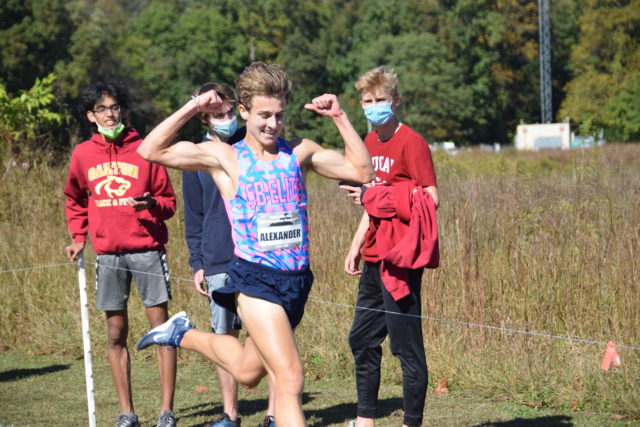
George Alexander was somewhere new, all alone in front of a cross country race. He pulled away from the rest of the field in the red race at the Virginia Elite Invitational at Hanover County’s Pole Green Park, and he alone fought the wind that picked up throughout the day. He surged as he approached the three mile mark as the clock neared his PR of 15:52, crossing the line, flexing and expecting his time to be just under 15:50. The problem was, the was 5k.

“I guess I was mentally checked out,” he said. “I was ready for it to be over, and I was wondering why people were yelling at me to keep going.”
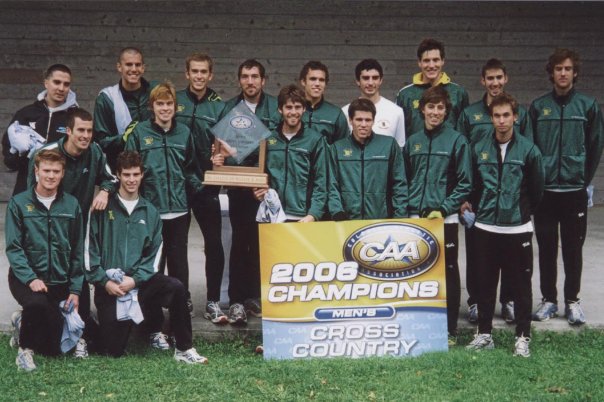
Bowen Shuttleworth left for Williamsburg last month, eager to join the dozens of young men from Northern Virginia who, over the years, made their academic and athletic marks while running for the College of William and Mary.  

Last Thursday, he skipped a physics lab to make a mandatory track team meeting. There, Athletic Director Samanta Huge told the men’s indoor and outdoor track athletes that their teams, along with men’s and women’s swimming and gymnastics and women’s volleyball teams, would be cut at the end of the school year, attributing the decision to budget pressures caused by the COVID-19 pandemic. Huge abruptly hung up the video call, Shuttleworth said, taking no questions.


The weight of the ink on her cross country uniform was almost imperceptible, but it dragged Julia Clark down when she raced. 

For three years, since the first time she walked into her high school as a freshman, the building taunted her. J.E.B. Stuart High School, named for a Confederate general. 


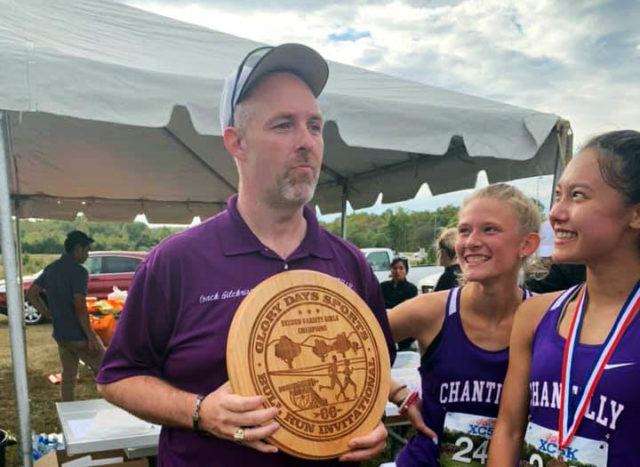
Chantilly Coach Matt Gilchrist offers his thoughts on the nascent club cross country movement. This is a good reminder that RunWashington welcomes input on issues related to Washington, D.C.-area running on all levels, and if you have thoughts to share, contact Charlie Ban at charlie(at) runwashington (dot) com.

The sun rises over Burke Lake and it’s 7 a.m. on an August morning.  We’re the first ones there, the first Monday of a new cross country season, with all the promise and potential that lies ahead.  We are brimming with enthusiasm and filled with confidence and energy that is gained by a full summer of group conditioning, motivated for another successful fall season.  This has been the same ritual that we’ve practiced year in and year out, but this year when August came, we stayed home.  For the first time in my 25 years of coaching, there have been no practices at Burke Lake.  Instead of heading to Lost River, W.Wa. for our annual team camp, we all stayed home.  The motivation hasn’t changed and the hunger to run and to compete is still there, but in the world dealing with COVID-19, these annual rites of passages are chief on a list of things that we are missing out on.


Kelly Deegan lives close enough to a park that almost every day, she sees organized sports practices and games happening. She also got a phone call from the Westfield High School administration, asking if three teenagers — who a local resident saw running together — were on her cross country team. She hasn’t seen her runners since March… they weren’t her runners.

That drove home her frustration about the fate of high school cross country during the COVID-19 pandemic.


Though she put away her jumping spikes a few years ago, Lake Braddock alumna Maddie Manhertz Swegle is still flying through the air, this time in a navy fighter jet. On Friday, she will become the first African American tactical air pilot.

Though she was primarily a long and triple jumper at Lake Braddock and later at the U.S. Naval Academy, Swegle was willing to pitch in on the track too, including running a leg of the 2012 AAA state champion outdoor 3200 meter relay team that finished with a six-second lead over West Springfield in 9:20.9.


A Walt Whitman runner is getting a bone marrow transplant, but will need help from blood and platlet transfusions. 

Ben Lesser got a major boost in his fight acute myeloid leukemia when the National Marrow Donor Program yielded a partial match.


Running again took a lot of faith for Vicki McGorty. 

Despite a running career that went back 44 years and took her to the high school cross country championship and a collegiate career at the University of North Carolina at Chapel Hill, as she launched herself in the air April 4, she wasn’t sure what would happen when she came back down.


Motivating high school runners is not always easy, even without a global health crisis going on. But with the coronavirus pandemic sweeping the world, preventing kids from coming to school-sponsored organized practices or attending track meets, keeping high school runners motivated becomes an even greater challenge.

Anthony Belber, head track and field coach at the Georgetown Day School, anticipates that it will be weeks until the team can reunite in person, something he acknowledges is going to be difficult.


View More Stories