DCXC

Doubts swirled around my head, and my right quad muscles ached with cramp-like pain. It was only ten miles into the 2021 Philadelphia Marathon but as I watched what felt like hundreds of runners zip past me, I started to recalibrate my pre-race goal: Three hours and 50 minutes became four hours. Then four and a half hours. Then simply finishing.

The race turned into a mental battle. My legs screamed for me to stop and walk, while my brain urged me to continue on pace. The 10th mile would be my slowest up to that point. I tried to find motivation wherever I could. I repeated the mantras, “mind over body” and “don’t run scared,” to myself as I locked on to the runners in front of me. I visualized how satisfying it would feel when I crossed the finish line with another sub-four hour marathon. I thought about my supporters back home who were tracking my race online. 

DCXC

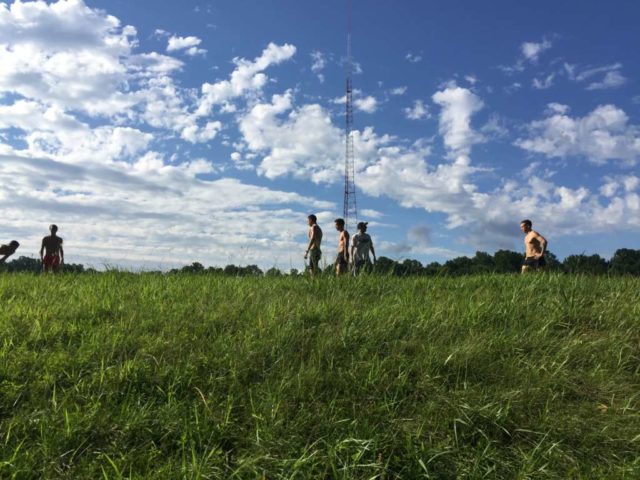
Tom Martin isn’t sure what he’d do without the towers field in Bethesda, Md. Maybe his cross country runners would have to do more workouts on the track, he says. Maybe he’d even think about retiring from coaching. That’s how important the roughly 1.25-mile, grass-and-dirt loop around the WMAL radio towers is to him. It’s more than just a 75-acre field nestled between two highways and not far from Walter Johnson High School, where Martin coaches. It’s a crucial piece of the local running culture in Montgomery County.

“For me, it’s almost as if, when that goes away, I might consider retiring,” Martin says. “It’s invaluable just to have… this nice open space where we can do all different kinds of workouts. It would be a tremendous loss to our program.”


News

Conroy Zien dropped everything he was carrying when he spotted his wife, Glenda Garcia, outside the finisher’s chute at the Erie Marathon earlier this month and began to cry. Garcia figured the worst. Not again, she thought. 

“I got really sad,” she said. “Like, how do we recover from this? I’m already thinking about how I can help him get over this.”


News

As a gregarious extrovert, Roman Gurule met a number of his friends through happy hours and dinners during his time as a federal government employee. He joined his colleagues whenever they drank alcohol and Gurule went out about five times a week to relieve stress from work. It felt like a normal thing to do, even if he would wake up the next morning with a pounding headache and a scant memory of what happened the previous night.

He repeatedly told his friends he would cut back on his self-proclaimed “rockstar lifestyle” that he started after college, but then it would happen again the following weekend. And the next. “I think that nobody took me seriously,” Gurule says. 


News

Conroy Zien celebrated finishing the 2016 Rehoboth Beach Seashore Marathon at a post-race party surrounded by some of his closest friends he’s made through running and with another medal around his neck to add to his extensive collection of race souvenirs.

His time of 3 hours, 35 minutes, and 14 seconds placed him 138th overall out of 872 total finishers and top 25 in his age group. As the co-director of Montgomery County Road Runners Club’s First Time Marathon Training Program, Zien has helped hundreds of novice runners, including this reporter, accomplish their dream of completing 26.2 miles. RunWashington readers voted him Best Running Coach in 2015.


News

Desta Beriso Morkama was in a hurry. After winning the Marine Corps Marathon last October, Morkama quickly packed up his belongings, accepted his trophy and rode his bike home, where he made himself a quick meal and jumped into bed for a 30-minute power nap.

A few hours later, he would be reporting to his first shift at the local 7-Eleven convenience store. The celebration would have to wait.


News

Ted Poulos was living the lifestyle of a typical post-college student. Employed for the first time since graduation, the 22-year-old indulged himself in happy hours during the week, followed by parties on the weekends. There was no better way to unwind after working long hours as an electrical engineer for IBM.

But the constant flow of beer and ample supply of fried food left little room for physical activity, and after about a month of the happy hour scene, Poulos decided it was time for a change – even if it meant giving up the simple, comfortable routine he had fallen into.