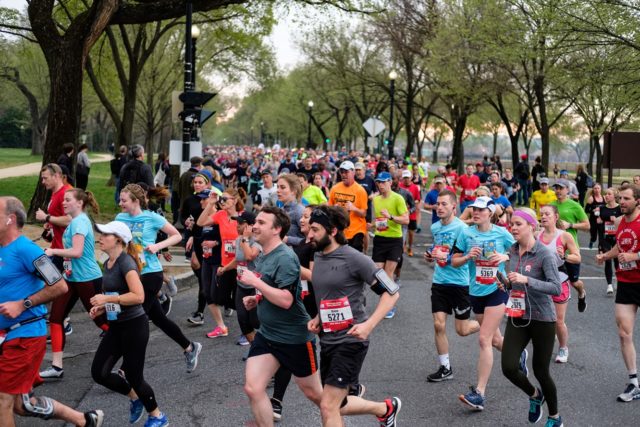
With more than 700 runners heading to Atlanta this weekend to take a shot at the U.S. Olympic Marathon team, it’s hard to deny that Trials Fever is in the air. 

Runners who spend all day standing up teaching, others who fit in their training around work and grad school, some who are also raising children, they’re all going to be on the starting line with the professionals. With apologies to another sporting venue in Georgia, this is the tradition truly unlike any other. 


A warm day for marathoners can be pleasant for spectators, at least. But the weather in Los Angeles for the last Olympic Marathon Trials wasn’t good for anyone: A combo of high temperatures and noontime sun made it hurt just to be outside. My favorite spot to watch the race was in the shade beneath an overpass.

Which is why I’ll never forget the first time I saw my friend Kieran O’Connor pass by me. 


It’s that time of year — when stuffy noses, sore throats and congestion abound. During cold and flu season it can be tempting to ignore symptoms to get in a run or a workout as spring race season approaches, but it begs the question: when is it OK to run when you have a cold, and when should you take a break?

It all boils down to how severe your symptoms are and how your body is feeling, said Dr. Glenn Wortmann, director of infectious diseases at MedStar Washington Hospital Center and an avid runner himself for about 20 years.


As her World Class Athlete Program team stood victorious in winning the 2015 Army Ten-Miler, Kelly Calway lowered her five-month-old daughter, Hattie, into the trophy. She fit perfectly. 

Four months later, when Calway came home from Los Angeles with a stress fracture, it was her eight-year-old, Hazel who told her, “Mom, I love you,” and helped ease Calway’s fears that she had let the family down when she dropped out of the 2016 Olympic Trials.


Usually, running coach Kathy Pugh’s More than Miles Bootcamp group doesn’t cross streets for their runs, but Pugh said when they do, Roberta Stewart is there to serve as “safety patrol.”   

Even if there are no cars coming, Stewart backs Pugh up on not crossing without a “walk” signal. 


Kathy Newberry’s running career has spanned nearly 20 years and has included six trips to world championship races and thousands of training miles, starting when she ran at Lake Braddock Secondary School.

Her secret to such a long trip? The same as the transoceanic flights to those races — plenty of fuel.


Don’t be surprised if you look along the starting line of your next neighborhood 5k and see a fourth grader wearing a cape. You might be looking at that cape once Matteo Lambert speeds off down the course, raising money for his very own non-profit, Off the Charts Club.

Vienna native Matteo, 9, spent 2019 running 33 charity-driven races in 15 states and Canada, totaling over 100 miles and racking up nearly $65,000 to donate to Hopecam, an organization that helps kids with cancer stay connected to their classmates through technology.


Nothing the doctors told her about her daughter’s Type 1 diabetes diagnosis sounded like “you will direct a race in 10 years.”

She was more worried that Isabelle couldn’t eat when she was hungry, which emotionally tough for both of them, on top of Isabelle’s physical discomfort. She was concerned with how much she could eat relative to her insulin levels, trying to avoid a seizure or diabetic coma. She was concerned with keeping Isabelle’s blood glucose levels under control while she was playing, trying to let her just be a kid.


Frank Perna remembers smiling a lot as he ran the Jacksonville Marathon earlier this month. 

The Bethesda man, 56, was aiming to finish in under three hours, making this his fifth straight decade of running sub-3 hour marathons. 


View More Stories