The Dojo of Pain held a certified marathon and half marathon Dec. 5 in East Potomac Park.
|
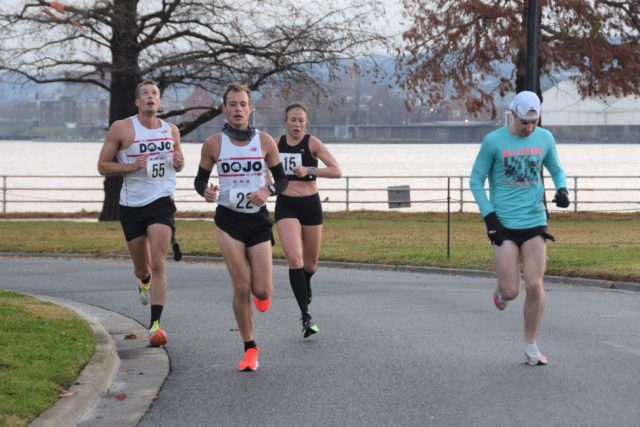


The Dojo of Pain held a certified marathon and half marathon Dec. 5 in East Potomac Park.
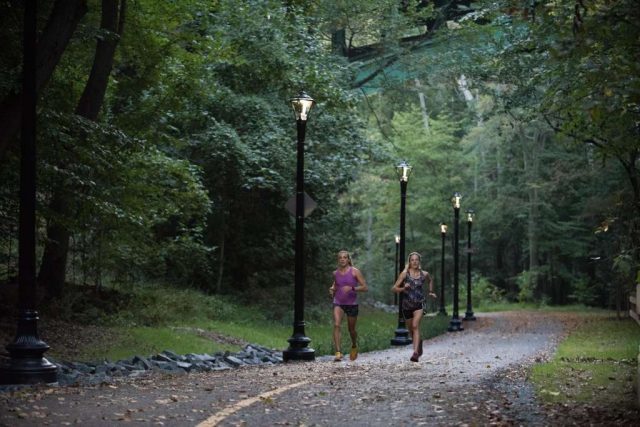
When I cobbled together a few routes for the DMV Distance Derby, I arbitrarily said it would last through the end of 2020. It makes a lot more sense to have the term of the challenge last for an entire year, so as of right now, let’s go through April 30, 2021. By then, if reports are to be believed, COVID-19 vaccines should be reaching wide circulation and the road racing industry will likely have a clearer path forward for resuming operations. I may retire some underused segments at the end of the year, however, in favor of more popular or accessible routes.
View overall results for the first six months of the DMV Distance Derby here
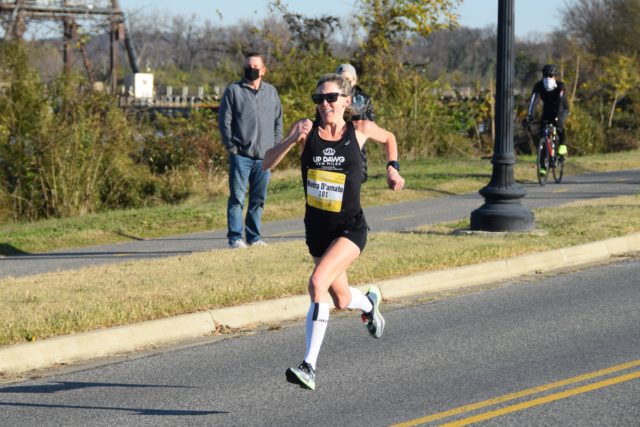
Keira D’Amato has made her own fun the last nine months, refusing to let her momentum from the Olympic Marathon Trials go to waste, even as the COVID-19 pandemic has transformed the racing landscape. This morning, she made her own race, and came out of it with an American record for the women’s-only 10 mile in 51:23. Janet Bawcom had set the previous record, 52:12, at the 2104 Credit Union Cherry Blossom Ten Mile, which she watched up close, holding the finishing tape.
A Cherry Blossom-managed race in Anacostia Park in Washington, D.C., dubbed by D’Amato the “Updawg Ten Miler,” drew Olympic Marathoner Molly Seidel of Boston, locals Susanna Sullivan and Bethany Sachtleben (now of Boulder) and Flagstaff-based Emily Durgin. But D’Amato, an Oakton High School and American University alumna who lives near Richmond, was already two seconds ahead of Seidel roughly a quarter-mile into the race and wasn’t in jeopardy the rest of the way as she ran to a 2:13 margin.
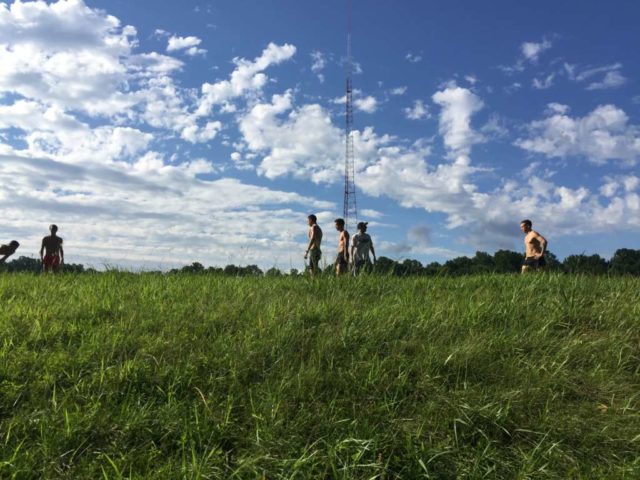
Tom Martin isn’t sure what he’d do without the towers field in Bethesda, Md. Maybe his cross country runners would have to do more workouts on the track, he says. Maybe he’d even think about retiring from coaching. That’s how important the roughly 1.25-mile, grass-and-dirt loop around the WMAL radio towers is to him. It’s more than just a 75-acre field nestled between two highways and not far from Walter Johnson High School, where Martin coaches. It’s a crucial piece of the local running culture in Montgomery County.
“For me, it’s almost as if, when that goes away, I might consider retiring,” Martin says. “It’s invaluable just to have… this nice open space where we can do all different kinds of workouts. It would be a tremendous loss to our program.”
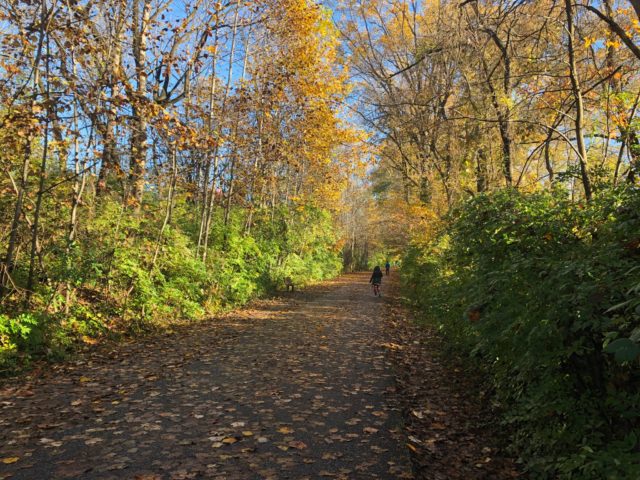
Though it hung around longer than usual this fall, the humidity seems to be receeding for the fall and winter, opening up conditions for some more pleasant attempts at the longer segments in the DMV Distance Derby.
Admittedly, last month’s addition of a 10k in the Arboteum was a little confusing – blame that on me making a wrong turn while putting the segment together. This month’s addition is simple – downhill on the Capital Crescent Trail, starting in Bethesda and finishing at the Key Bridge. It’s a few steps under 7.1 miles starting at Bethesda Avenue and ending under the Key Bridge. There are two things to keep in mind: the key bridge is under the Whitehurst Freeway past the trailhead gate and Little Falls Parkway is closed to traffic on the weekends, leaving one low-speed intersection- Dorset Ave, about a mile in, as the only major hazard.
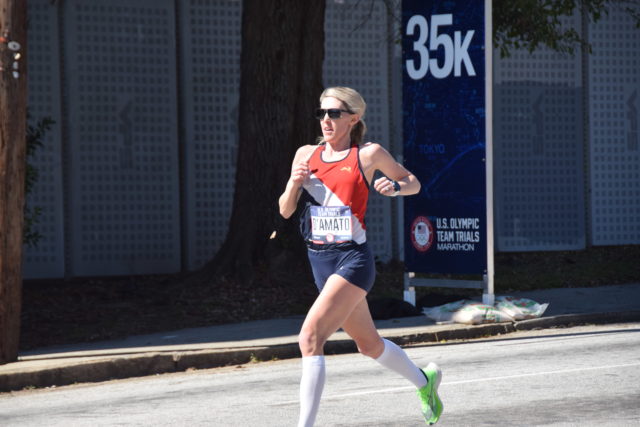
The bats are silent in D.C. at a time when a year ago, the Nationals were winning their first World Series. Instead, Oakton native and American University alumna Keira D’Amato is standing at home plate, pointing to the Washington Monument and calling her shot — an attempt at the U.S. 10-mile record in less than a month.
Backed up by the Credit Union Cherry Blossom Ten Mile team that she’s been working with for nearly a decade, D’Amato will run a small road race in the D.C. area Nov. 23 to try and top Janet Bawcom’s 52:12 time for a women-only 10-mile, which she set in 2014 at Cherry Blossom.

It had been a while since I had added a new loop, so to celebrate the return of reasonable hours for the National Arboretum, there is now a 10k segment in there, mostly free of car traffic.
The loop follows the outer loop, going clockwise, with a trip up to Mount Hamilton (counterclockwise around the top loop), and then a smaller interior loop. You can follow the path of the loop, which is a few steps over 10k, here. The start is the R Street exit sign and the finish the cross street on the road leading to the out-of-use gate. It’s really easier to follow the map, but it makes sense when you’re in there. If people are interested, I will add chalk markings.
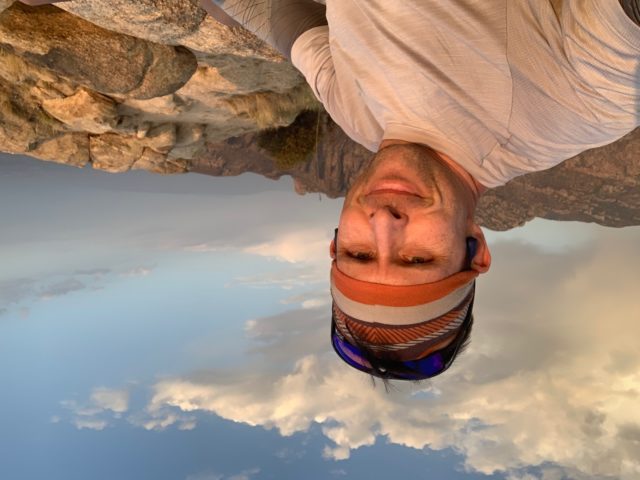
A former West Point classmate needed a new kidney, and Dave Ashley did a blood test to see if he was a match.
After further testing, it turned out he was. But when he tried to research whether he’d be able to keep doing endurance sports, which helped him with anxiety issues resulting from deployment, he wasn’t able to find answers.
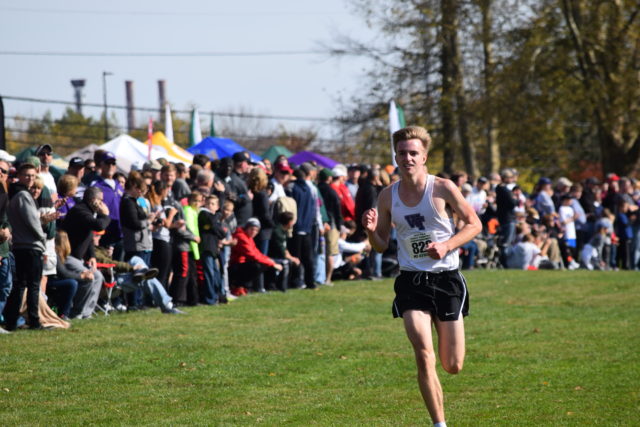
Tristan Forsythe didn’t like what he was reading.
It wasn’t that there wasn’t enough writing about running out there, it just didn’t speak to him in a voice he recognized.
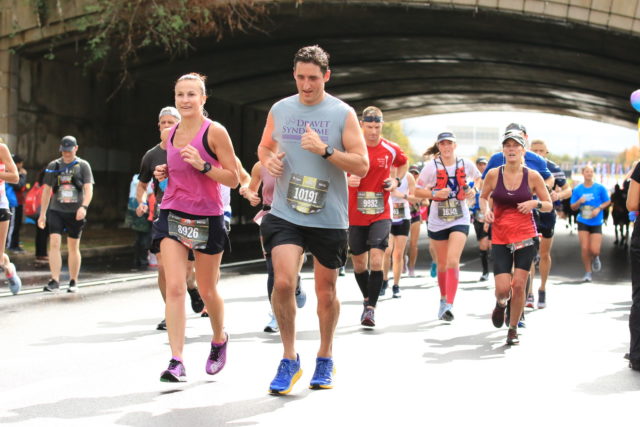
I’m sure in a few weeks, a lot of runners will be wishing for the kind of weather the 2019 Marine Corps Marathon had – heavy rains punctuated by muggy pauses. But we’ve had six months to bemoan the loss of most marathons this year. This is a chance to look back at where we ran in 2019.
The number of domestic marathon finishes by D.C.-area runners fell slightly, with at least 12,939 different finishes in 294 of 697 U.S. races, down from 12,981 finishes in 278 races. Some individual runners doubled, tripled, quadrupled and more, but they all added up to 12,932 finishes and 339,001.8 miles, not counting the extra miles they logged because they couldn’t run the tangents.