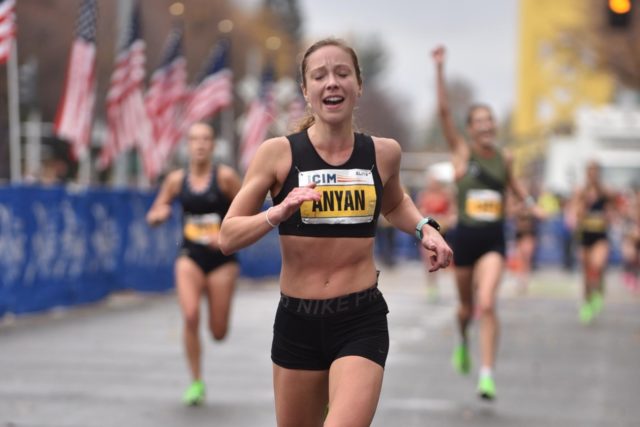
Sarah Anyan’s feet hurt, and her shoes weren’t going to make things much better. But as much as she and Tyler loved running, they weren’t going to walk down the aisle in cushioned trainers. 

So, months of plantar pain be damned, she danced and had a great time at her wedding. And when she woke up, she felt…better. 
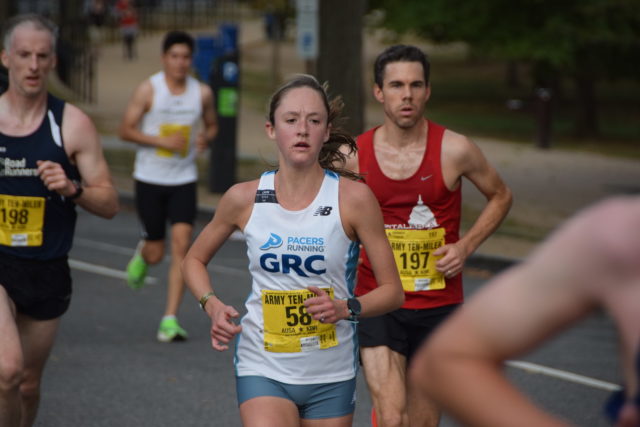

The weekend of the 2019 Houston Marathon, Maura Linde reviewed the course map for a final time — not to make sure she had every turn, hill, and water station memorized, but rather to scope out the medical aid stations so she could drop out with people nearby.

“I really did think I wasn’t going to finish it,” she said.


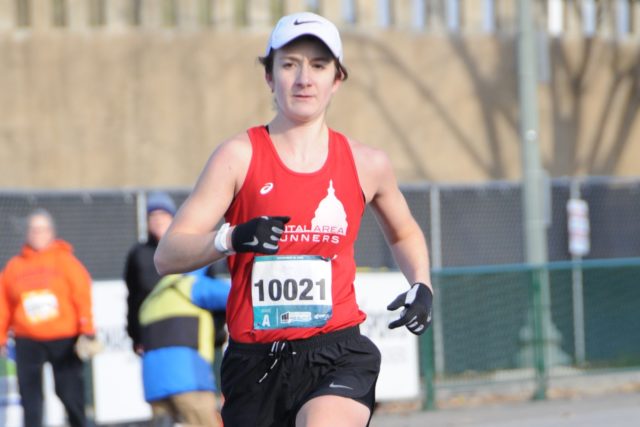
Chip time doesn’t mean a thing while chasing an Olympic Marathon Trials qualifier. It was going to be up to Rachel Viger to hurry across the starting line at the California International Marathon, then run the 26.2 miles even faster than the 2:45:00 qualifying time. 

She wound up taking 12 seconds to get across the starting line because she didn’t make the elite start, coming into the Dec. 8 race with just a 3:03:59 personal best, set a year before at the Marine Corps Marathon. From that alone, running under 2:45, plus those extra seconds, would seem daunting. But she did it, with 46 seconds to spare.


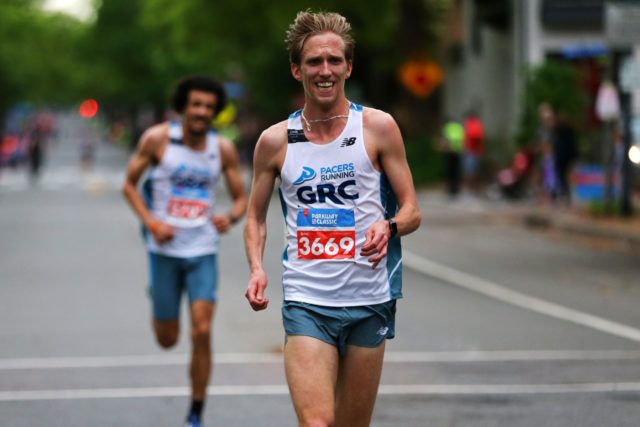
Running along the C&O Canal Towpath last fall, Dan Meteer bumped into Arlingtonians Mike Crozier and Clint McKelvey. Typically a solo runner, Meteer joined them, and listened to the two discuss a friend’s marathon training.

By Meteer’s retelling, they expressed skepticism their friend was running enough to help him break 2:19 and qualify him for the Olympic Marathon Trials. Approaching his own debut marathon at California International a few months later, Meteer, 24, was eager to hear their opinions, then horrified.


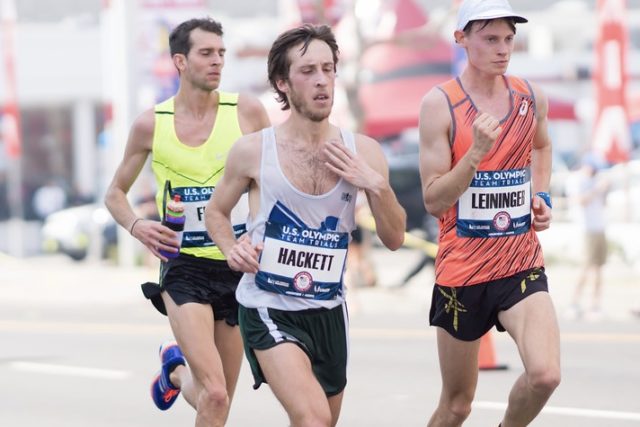
Racing a cross country 10K six days after running an Olympic Marathon Trials qualifying time isn’t exactly a conventional decision, but Everett Hackett isn’t exactly a conventional guy.

He ran cross country and track at George Mason University, and his college coach, Andrew Gerard, said Hackett doesn’t have a filter or care what others think.


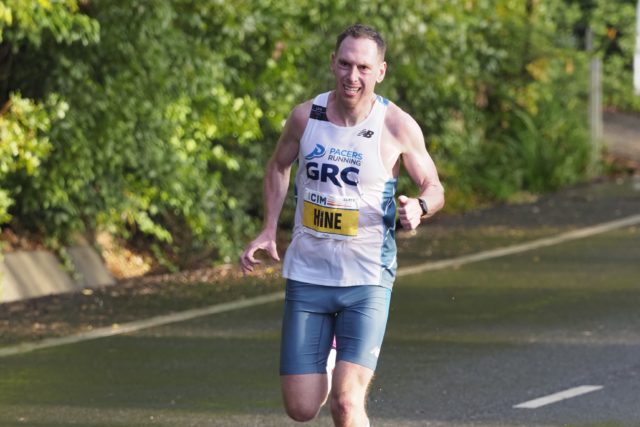
Zach Hine has been running for more than 15 years and has accomplished something few runners can boast: he’s never been injured. And, oh yeah, he’s qualified for the Olympic trials in the marathon three separate times.

“I’ve been able to do the distance training without any serious injuries so that’s why I’ve been able to move up and do a lot of races,” said Hine, a 32-year-old who recently moved to the D.C. area from Colorado.


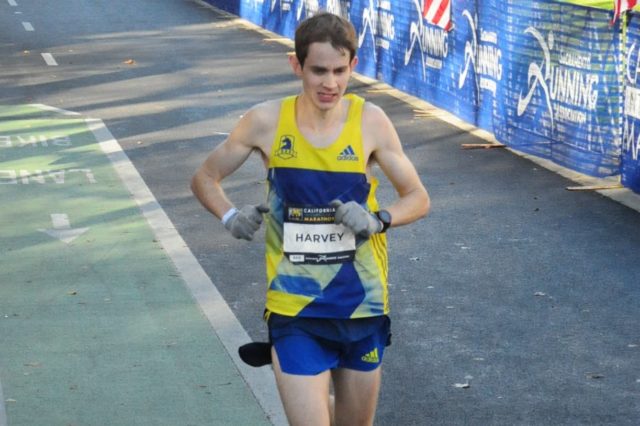
Brian Harvey has come a long way from his 24-minute 5k during his freshman year of high school. The Ellicott City native, who now runs for the Boston Athletic Association (BAA), qualified for the 2020 Olympic Marathon Trials with a 2:17:48 finish at the 2018 California International Marathon. It will be his second appearance at the Trials.

The key to success for this Cambridge, Mass., resident has been his ability to balance consistent race performances with his full-time jobs as a biomedical engineer and as a father to his two-year-old daughter. Most days his training is done by 7 a.m. so that he and his wife can get ready for work.


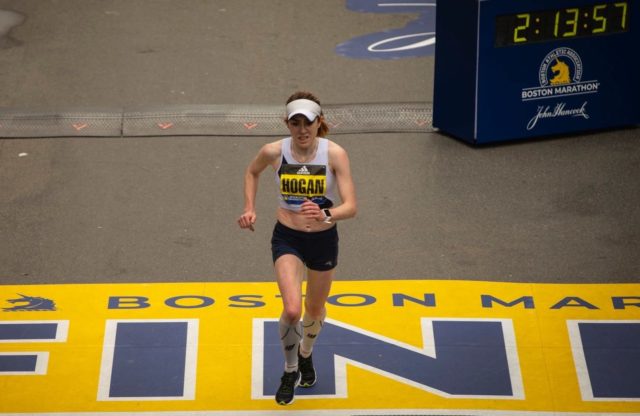
Some people spend years training to qualify for the Olympic Marathon Trials, but George Washington alumna Megan Hogan did it twice before she ever got to run a marathon.

But eight years after she left D.C. to embark on a brief professional running career, Hogan finally ran a marathon, finishing Boston in 2:42:00 to qualify for the Trials for the third time. It followed a “pretty conservative” training cycle, and she is now eager to begin training for the trials and devote more of her focus to marathon training, in hopes of making it to the race without injury for the first time. She made the 2012 Trials with a 10k time qualifier and the 2016 Trials with a half marathon time.


It took U.S. Marine Corps Capt. Lindsay Carrick two hours and 43 minutes (and 43 seconds) to run the Military World Games marathon in Wuhan, China. It took more than three weeks to find out her effort was good enough to qualify for the Olympic Marathon Trials.

But the course and race management checked out, and it made the fall and winter a lot simpler for Carrick, who had been aiming to run under 2:45 for two years.


Andrew Bumbalough’s marathon career began almost by accident. 

A professional runner for Nike since 2010, Bumbalough was training with the Bowerman Track Club in Portland, Ore. and focusing on chipping away at his 5K PR, aiming  to qualify for the Olympic and World Championship teams. But then one of his teammates was trying to make the 2012 Olympic marathon team, and he needed a pacer. 


View More Stories